Any Question +91 90022 37890

Underwater Lift Bags: Turning Buoyancy into Lifting Power
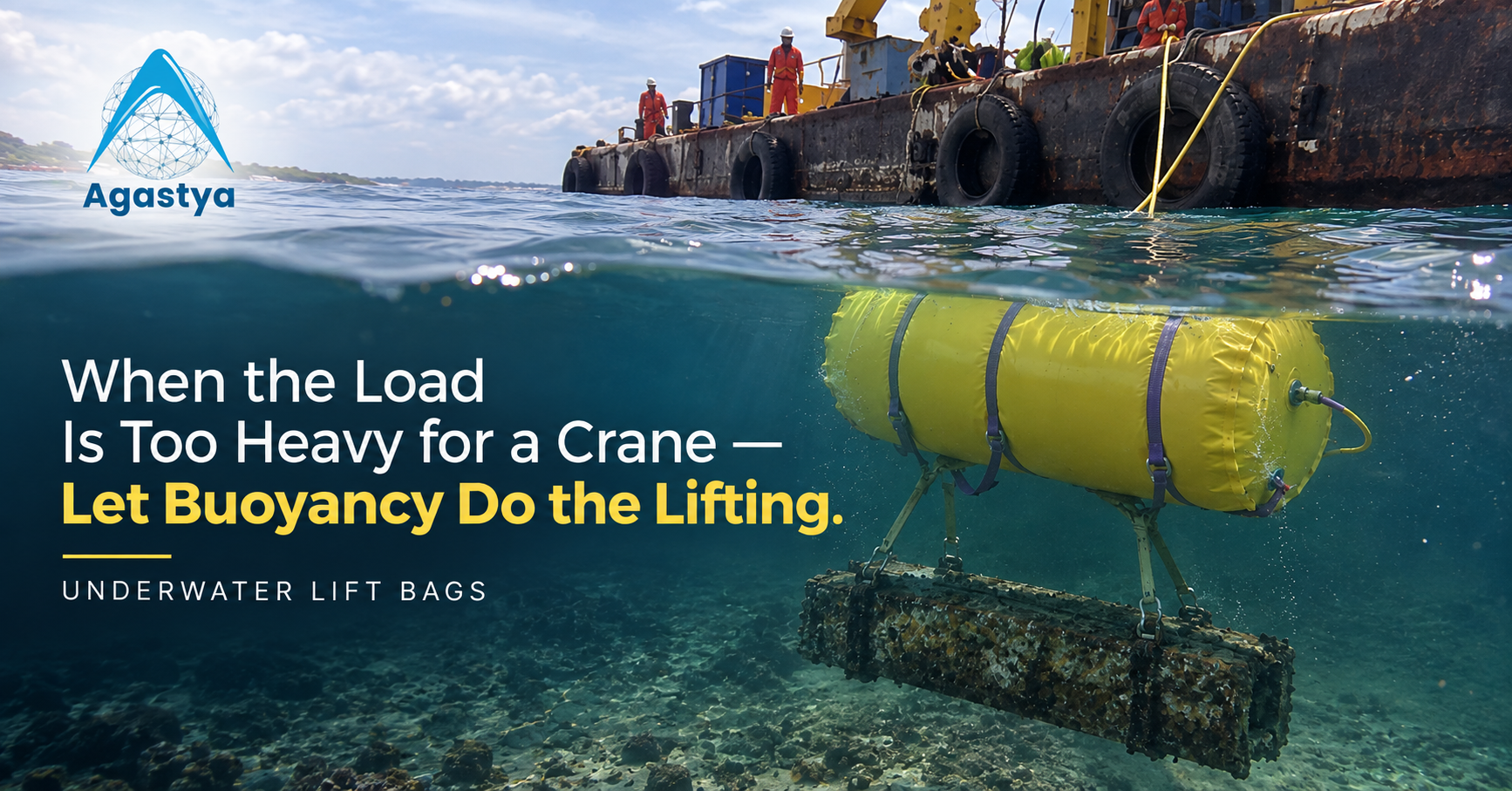
How controlled buoyancy helps recover and position heavy subsea loads When a heavy object is sitting on the seabed, conventional lifting can become difficult due to depth, restricted access, currents and the weight of the submerged load.
Underwater Lift Bags offer a practical solution by using one of nature's most basic forces:
buoyancy. An inflatable lift bag displaces surrounding water and generates upward force. When connected to a submerged load through properly designed slings, straps and lifting points, this buoyancy can help raise, reposition or recover equipment from underwater. How does it work?
The basic principle is simple:
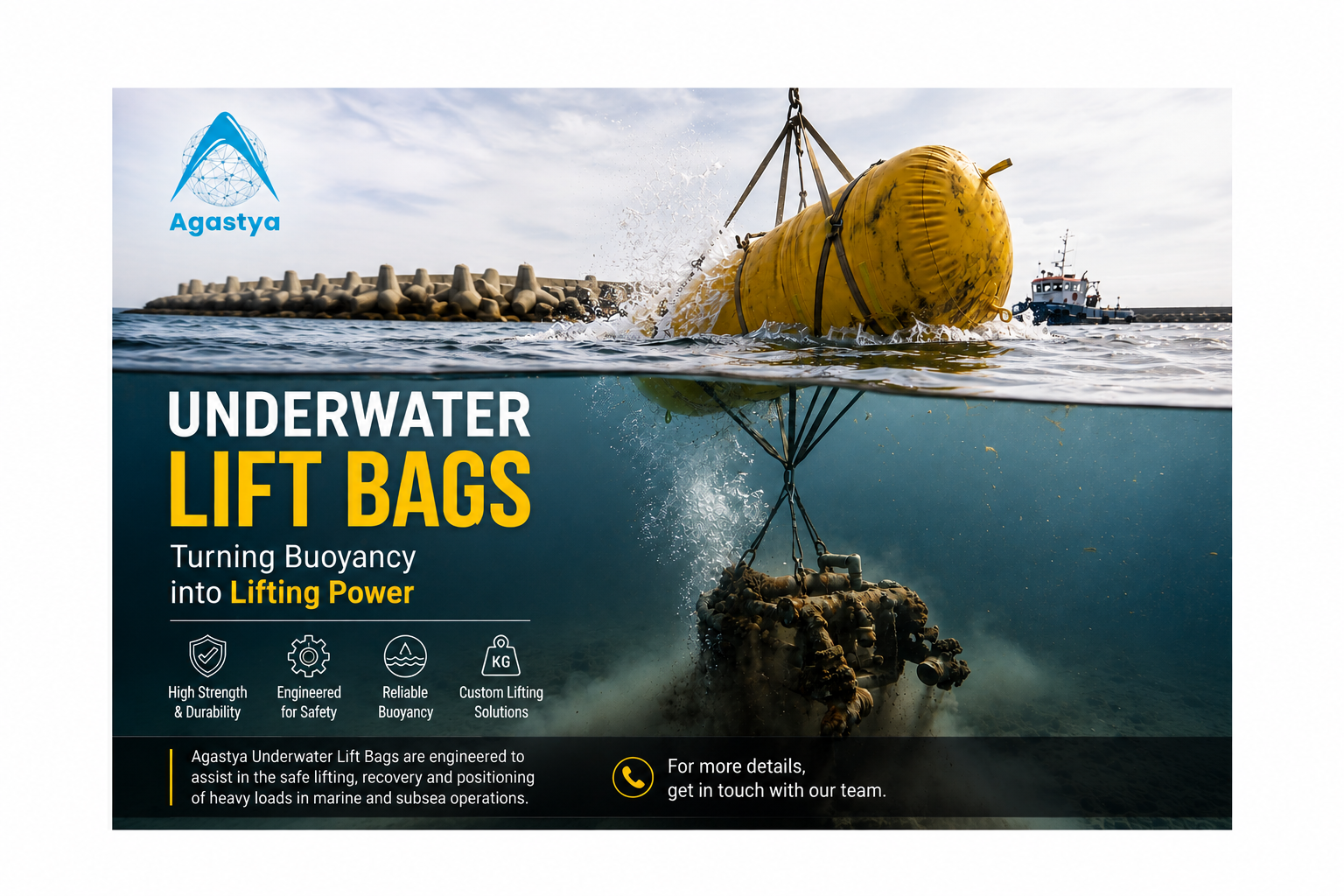
Inflate → Generate Buoyancy → Take Load → Lift → Control the Ascent As the bag is inflated at depth, its displaced volume creates upward buoyant force. The required bag capacity depends not only on the object's weight, but also on factors such as water density, depth, rigging arrangement, load geometry and the amount of buoyancy required. During recovery, the load may initially be partially buried in sediment. Once it breaks free, disturbed silt and bubbles can indicate the transition from seabed contact to suspended lifting—as seen in the image.
Where are lift bags used?
Underwater lift bags are commonly considered for: Marine salvage and wreck recovery Subsea equipment handling Pipeline and offshore construction Anchor and mooring recovery Port and harbour operations Positioning of submerged structures Recovery of machinery and heavy componentsWhy engineering matters.
A lift bag is not simply an inflatable float. Rigging, lifting points, load assessment and buoyancy control are critical parts of the lifting system. Industry safety guidance highlights the importance of engineered lift planning, appropriate rigging, inspection and controlled operation. IMCA has documented incidents involving uncontrolled ascent and rigging failures, demonstrating why correct attachment and restraint arrangements must be verified before inflation. The real value of a subsea lift bag is therefore not just its lifting capacity—it is the ability to provide controlled, flexible buoyancy where conventional lifting methods may be difficult to deploy. From seabed recovery to offshore construction, controlled buoyancy can turn a challenging underwater movement into a manageable engineering operation. #UnderwaterLiftBag #SubseaLiftBag #MarineSalvage #SubseaOperations #MarineEngineering #OffshoreEngineering #UnderwaterLifting #Buoyancy #SalvageOperations #MarineEquipment