Any Question +91 90022 37890

Aluminium Flood Barriers:
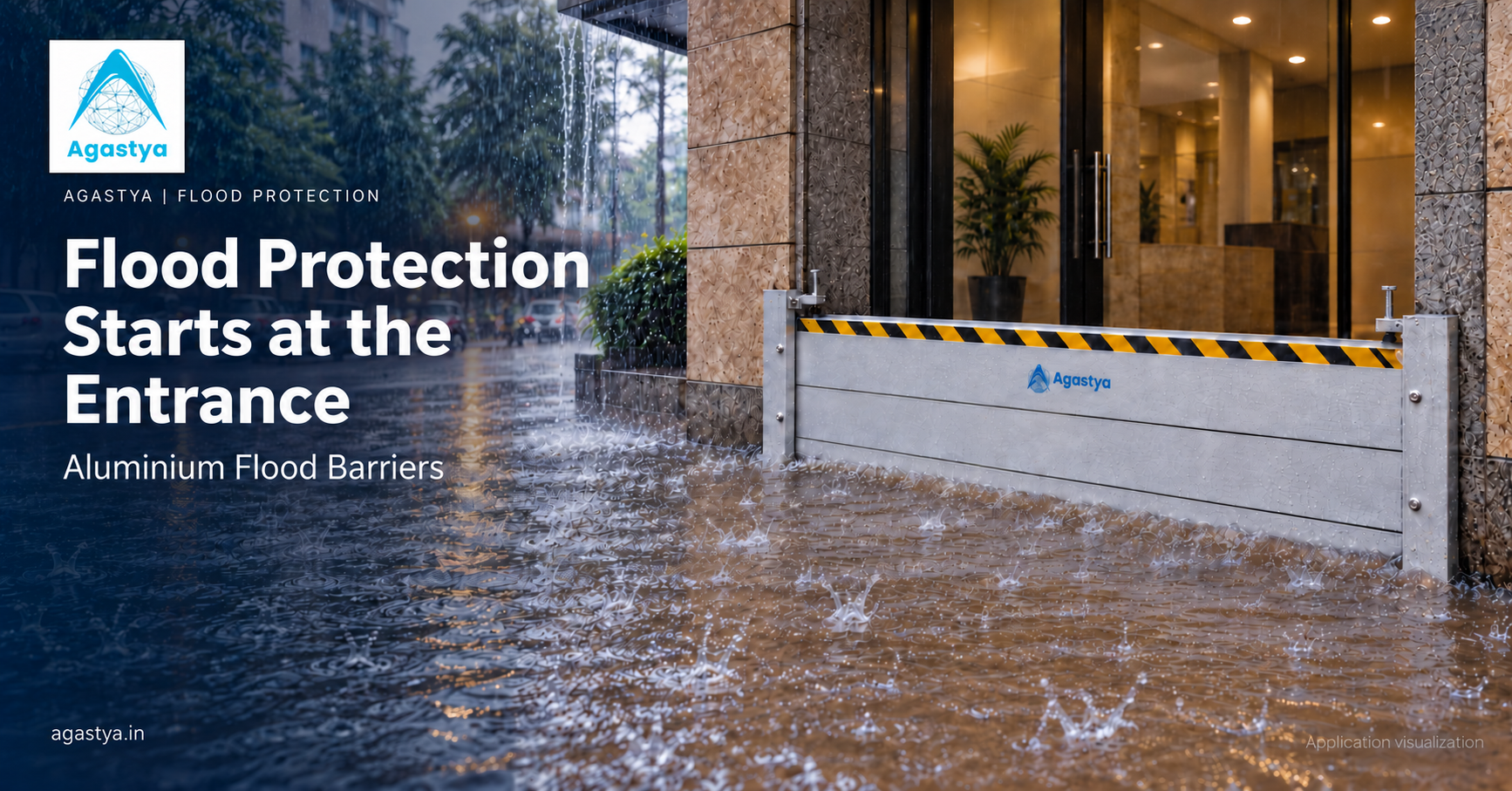
Flood Protection Starts at the Entrance A few centimetres of water can put an entire working day at risk. Water entering a building can affect stock, machinery, electrical equipment and everyday operations.
For shops, warehouses, factories and commercial properties, an exposed entrance deserves particular attention when preparing for heavy rainfall. A removable aluminium flood barrier provides a physical obstruction across a vulnerable opening. However, effective flood protection depends on more than the panels alone: the supporting structure, sealing arrangement, drainage and deployment plan all matter. The right time to protect an entrance is before water reaches it.
What Is an Aluminium Flood Barrier?
An aluminium flood barrier is an opening-protection system designed to reduce floodwater entry through a doorway, gateway or other assessed access point. Agastya’s illustrated system uses horizontal aluminium planks positioned between side supports. The panels form a removable barrier across the entrance, allowing the opening to return to normal use after removal. The configuration must suit the opening and the expected conditions. A barrier selected for one doorway should not automatically be assumed suitable for another. How Does It Work?
In a removable plank arrangement, horizontal panels are assembled within supporting channels. The specified sealing and compression components help control water passage at the panel joints, sides and bottom. The complete system generally includes: Component Purpose Aluminium panels or planks Form the physical barrier across the opening Side supports or channels Locate the panels and transfer loads to the supporting structure Seals and gaskets Limit water passage at the designed interfaces Clamping or compression hardware Apply the specified restraint and sealing pressure Anchors and supporting structure Secure the assembly and resist the applied loadsThreshold or sill interface Provide a suitable surface for the bottom sealing arrangementThe exact components and installation details depend on the selected system. Flood shields transfer water-induced forces into adjacent structural elements, making the condition of the supporting structure an essential design consideration.
Where Can Aluminium Flood Barriers Be Considered? Potential applications include the following, subject to site assessment: Factories: production entrances and vulnerable service openings.Warehouses: goods-access points and loading-area entrances.
Retail premises: shopfront doors and storage access.Commercial buildings: ground-floor entrances and selected service areas.Residential properties: suitable doorways or access points following assessment of the building and flood risk. An entrance barrier protects a particular opening. It does not automatically protect the entire property.
Why Consider a Removable Aluminium System?
For properties that need regular access, a removable system offers the practical advantage of deploying protection when required and storing the panels between uses. Aluminium is used for flood shields because it combines relatively low weight with corrosion resistance. Nevertheless, panel strength, reinforcement and handling requirements depend on the span and flood loading; material choice alone does not establish performance. When comparing systems, ask about the complete assembly—including seals, anchors, storage and deployment—not simply the panel material.
What Should Be Checked Before Selecting a Barrier?
1. Opening dimensions and ground levels Record the clear width, available mounting space and entrance geometry. Check for slopes, uneven thresholds, damaged surfaces and obstructions. Measurements should describe the actual installation location, rather than relying only on a door’s nominal size.
2. Expected flood conditions Establish the likely water depth relative to the entrance, duration of flooding and potential flow or debris exposure. Previous flood marks can provide useful context, but should not be treated as a guaranteed maximum. Barrier height must follow the assessed risk and verified design limits.
3. Supporting walls and floor The proposed mounting surfaces must be suitable for the anchoring arrangement. Cracked masonry, weak finishes or unsuitable thresholds may require remedial work before installation.
4. Other water-entry routes Water can enter through drains, pipe penetrations, vents, walls or floors even when an entrance is protected. Groundwater also requires separate consideration. A property assessment should therefore examine the whole building and its drainage, including whether backflow protection is appropriate.
5. Deployment and access Decide who will install the panels, where components will be stored and how the team will receive a warning. Confirm that deployment can happen before conditions become unsafe. Keep an alternative safe access and evacuation arrangement available.
Installation and Deployment:
What to Expect Initial installation and deployment before a flood are different activities. Initial installation establishes the mounting arrangement, anchors, threshold interface and fit of the complete assembly. Deployment involves bringing the stored components into service according to the manufacturer’s instructions. A practical deployment plan should cover: Identifying the correct panels and components for each opening.Checking the supports, threshold and seals for damage or debris.Fitting panels in the specified order and orientation.Applying the required clamping or compression arrangement.Completing the prescribed checks and maintaining safe access.Installation time and staffing should be established through a site-specific practice exercise. Avoid assuming that every barrier can be deployed by one person or within a fixed number of minutes. Maintenance and Storage Keep a documented inspection routine, particularly before the monsoon and after use. Check for damaged panels, loose hardware, deteriorated seals and contamination on sealing surfaces. Store components securely so they remain accessible and protected from avoidable damage. Gaskets require particular attention because their condition affects sealing performance. Keep replacement-component details, deployment instructions and responsible-person contacts together. What Information Should You Send for an Enquiry?
To discuss an aluminium flood barrier with Agastya, share:
Clear photographs of the entrance, both sides and threshold.Opening width and relevant height measurements.Details of the supporting wall and floor construction, if known.Previous flooding information and observed water levels.Normal pedestrian or vehicle access requirements.The number of openings requiring assessment.Site location and any available drawings.These details provide a useful starting point for discussing a suitable arrangement. Final specifications should follow assessment and the agreed project scope.
Frequently Asked Questions Is an aluminium flood barrier completely waterproof?
Do not assume zero leakage. Ask for the system’s documented performance, applicable test conditions and operating limits. An opening barrier also cannot prevent water entering through unrelated routes.
Can it be fitted to an existing building?
Potentially, provided the opening, supporting structure and threshold can accommodate the proposed system. Some locations may need preparation or strengthening.
What is the maximum protection height?
There is no universal height for all aluminium barriers. The permitted height depends on the complete system, opening width, anchoring, supporting structure and design conditions.
Does a flood barrier replace drainage?
No. Entrance protection and drainage address different parts of the problem. Both should be considered within the property’s flood-preparedness plan.
Can the panels be reused?
Reuse depends on the system’s intended design and the condition of its components. Inspect, clean and maintain them according to the supplied instructions before redeployment. Prepare the Entrance Before the Monsoon A suitable barrier begins with understanding the opening, the flood risk and the people who will deploy it. Discuss your entrance flood-protection requirement with Agastya. Share site photographs and opening dimensions through the enquiry options at agastya.in. Rain is seasonal. Preparedness shouldn’t be.