Any Question +91 90022 37890

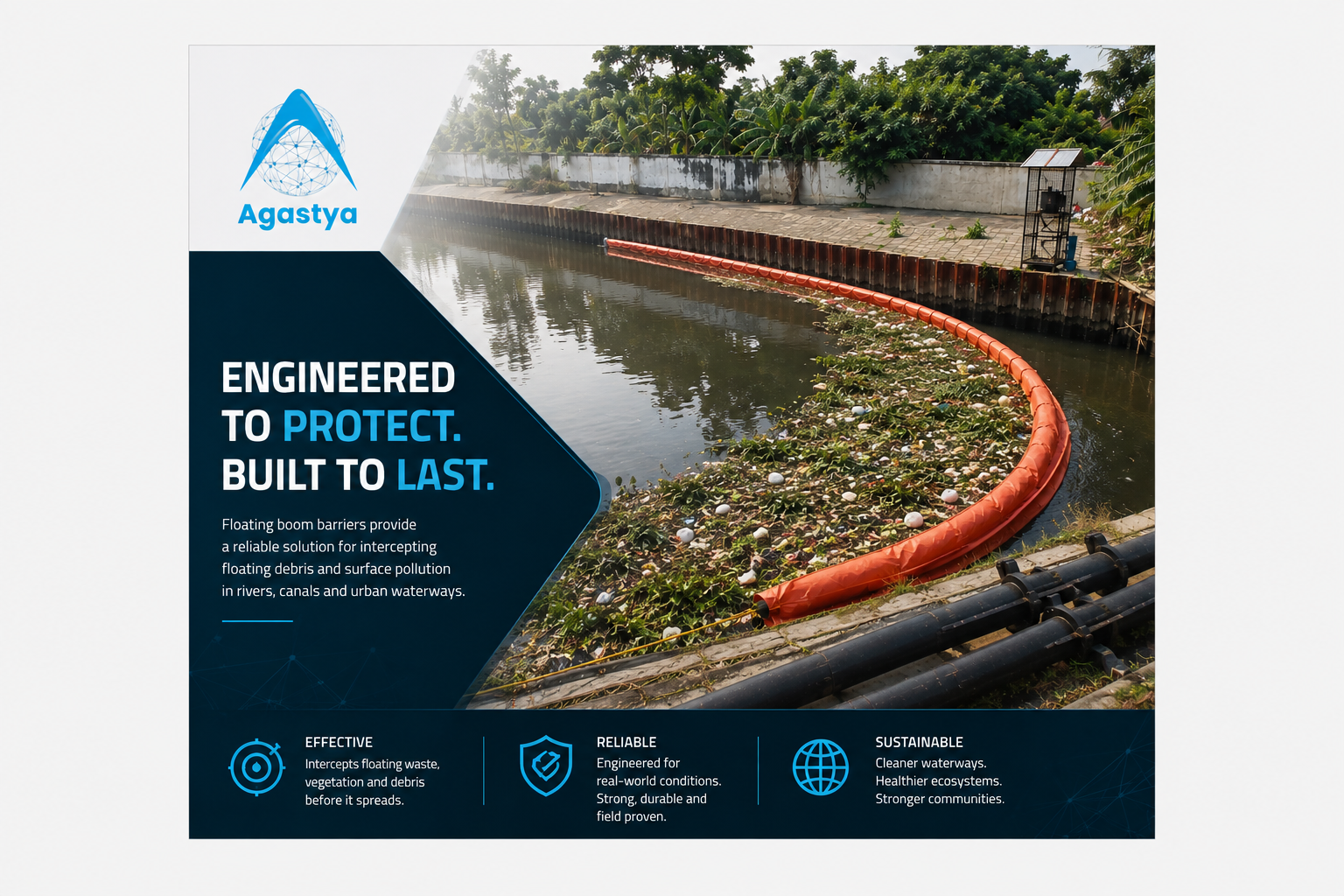
Floating Boom Barrier: A Smart Solution for Floating Debris Control Floating Boom Barriers are engineered systems designed to intercept and control floating waste, plastic, vegetation and other debris travelling through rivers, canals, drainage channels and reservoirs. Instead of allowing floating debris to spread downstream, the boom creates a controlled interception zone where waste can accumulate and be removed efficiently. How Does a Floating Boom Work? The boom is strategically positioned across or along a waterway according to the direction of water flow. Its floating section remains at the surface while the submerged portion helps prevent debris from passing underneath. As the current carries floating waste towards the barrier, materials such as plastic bottles, leaves, branches, water hyacinth and lightweight packaging are intercepted and concentrated on one side of the boom. This makes collection easier and helps reduce the downstream movement of floating pollution. Why Is Proper Installation Important? Boom performance depends on several site conditions, including: Water flow velocity Channel width and depth Debris type and volume Boom angle and configuration Anchoring arrangement Seasonal water-level changes A properly engineered system should work with the water flow rather than simply blocking it. Where Can Floating Booms Be Used? Floating Boom Barriers can be deployed in: Rivers • Urban Canals • Stormwater Channels • Drainage Systems • Reservoirs • Lakes • Industrial Waterways They are particularly useful where continuous floating debris enters a waterway and needs to be intercepted before reaching larger rivers, lakes or coastal environments. Environmental Impact Floating debris is not only a visual problem. Plastic and other waste can travel through drainage networks into larger aquatic ecosystems. A floating boom provides an additional physical interception layer, helping organisations capture debris at a controlled location before it spreads further. However, boom systems work best as part of a broader strategy combining waste reduction, proper disposal, waterway maintenance and regular debris collection. Conclusion A Floating Boom Barrier turns an uncontrolled floating-waste problem into a manageable interception and collection process. Intercept → Concentrate → Collect → Protect With the right engineering, installation and maintenance, floating boom systems can become an effective component of modern waterway pollution and floating debris management.